Built for Cruise, Broken at Full Throttle: Why High-Performance Organizations Stall at the Moment of Breakthrough

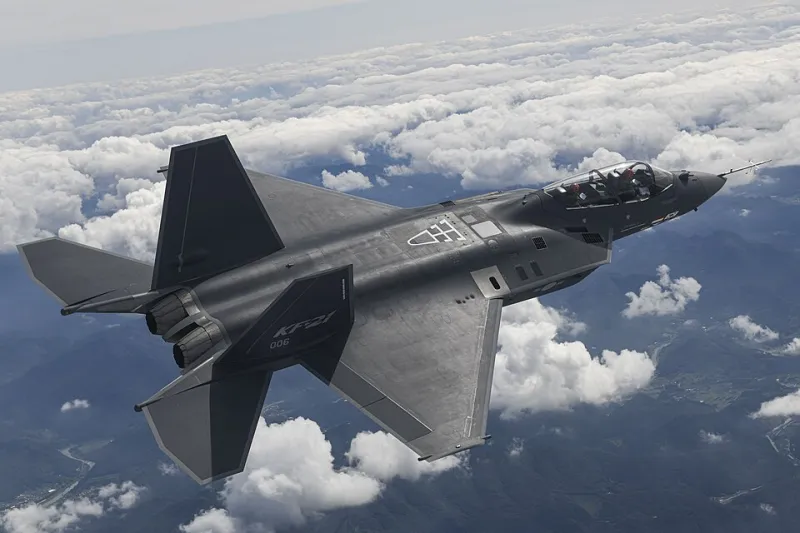
Photo: Cnyirahabihirwe12345, CC BY-SA 4.0, via Wikimedia Commons
The Architecture of the Plateau
There is a phenomenon in high-performance aviation known as supercruise—the ability of certain aircraft, including the F/A-18 Super Hornet, to sustain supersonic flight without engaging the fuel-intensive afterburner. It is an engineering achievement built on aerodynamic precision, thrust efficiency, and disciplined systems design. But here is what most people miss: the very configuration that makes supercruise possible also defines its ceiling. Push beyond that optimized envelope without structural reconfiguration, and performance degrades rather than compounds.
The same principle governs organizational growth—and it is costing American companies billions in unrealized competitive potential every year.
The organizations most likely to stall at the moment of strategic acceleration are not weak organizations. They are frequently well-run, operationally disciplined, and financially sound. They have been optimized—deliberately and intelligently—for the conditions they currently inhabit. And that optimization is precisely what makes the next level of performance structurally inaccessible.
Why Steady-State Excellence Becomes a Growth Liability
Consider what a high-functioning organization in steady-state actually looks like. Processes are standardized. Approval chains are calibrated to manage risk at current scale. Talent is deployed against known problem sets. Financial models are built on predictable revenue cadences. Every one of these attributes signals operational maturity.
Now introduce a breakthrough growth opportunity—a market expansion, an acquisition, a product pivot that demands a fundamentally different operating tempo. Suddenly, those same attributes reveal their inverse nature:
- Standardized processes lack the flexibility to accommodate novel workflows.
- Approval chains that managed risk at current scale now introduce latency that the market will not wait for.
- Talent optimized for known problem sets is misaligned against ambiguous, high-velocity challenges.
- Financial models built on predictability reject the variable burn profiles that aggressive growth requires.
The organization has not become less capable. It has become mismatched—a precision instrument applied to a task that requires a different instrument entirely.
The Diagnostic Problem: Stall Looks Like Caution
One of the most strategically dangerous aspects of this pattern is how it presents to leadership. When an organization stalls at the threshold of acceleration, the symptoms rarely announce themselves as structural failure. They arrive dressed as prudence.
Leaders observe teams requesting additional planning cycles before committing. They see budget committees applying steady-state ROI thresholds to growth-phase investments. They watch middle management slow-roll implementation timelines under the banner of "doing it right." From the executive suite, these behaviors can appear to be responsible stewardship. In reality, they are the organizational equivalent of an aircraft unable to generate the thrust necessary to break through its own aerodynamic drag.
The distinction matters enormously. An organization exercising genuine strategic caution can be redirected through better information. An organization structurally incapable of sustained acceleration requires architectural intervention—and treating the latter like the former is how growth windows close permanently.
A Framework for Identifying Your Structural Anchors
F18 Consulting has identified four primary categories of structural anchors that prevent organizations from sustaining high-velocity execution. We refer to these collectively as the GRIP framework—Governance, Resource Allocation, Incentive Architecture, and Process Rigidity.
Governance Drag manifests when decision rights are concentrated at levels of the organization that cannot process information at the speed the market demands. If the people closest to the opportunity lack the authority to act on it, velocity collapses at the point of greatest potential.
Resource Allocation Inertia occurs when capital and talent are distributed according to historical performance patterns rather than forward-looking strategic priority. Organizations that fund last year's winners at the expense of next year's bets are not managing risk—they are deferring competitive obsolescence.
Incentive Misalignment is perhaps the most insidious anchor. When compensation structures, promotion criteria, and performance reviews reward steady-state execution rather than growth-phase behavior, the organization's best people will rationally optimize for the wrong outcomes. You cannot build a high-velocity culture on incentives designed for a cruise-control environment.
Process Rigidity reflects the accumulated weight of standardization. Processes that were built to ensure consistency at scale frequently encode assumptions about operating tempo, risk tolerance, and decision latency that are incompatible with acceleration. The longer those processes have been in place, the more invisible their constraints become.
The Reconfiguration Imperative
Addressing structural anchors is not a change management exercise. It is an engineering problem—and it requires the same analytical precision that created the steady-state capability in the first place.
The first step is honest diagnostic work. Leadership teams must be willing to examine their governance structures, resource allocation logic, incentive frameworks, and core processes not through the lens of what they were designed to achieve, but through the lens of what they are currently preventing. These are not comfortable conversations. Organizations that have built genuine operational excellence have significant institutional identity wrapped up in the systems that delivered it. Questioning those systems can feel like questioning the competence of the people who built them.
It is not. It is recognizing that the conditions have changed, and the configuration must change with them.
The second step is sequencing the intervention. Not all structural anchors carry equal weight, and not all of them need to be addressed simultaneously. The organizations that successfully reconfigure for acceleration identify the two or three constraints with the highest drag coefficient and address those first. Attempting to restructure everything at once creates its own form of organizational turbulence—and frequently produces nothing except exhaustion.
The third step is building a parallel operating capability. In many cases, the most effective approach is not to reform the existing system wholesale, but to construct a parallel structure capable of operating at growth-phase tempo while the core business continues to execute at steady-state. This is not a permanent arrangement. It is a transitional architecture that allows the organization to generate proof of concept for the new operating model before asking the entire institution to adopt it.
The Cost of Waiting
Markets do not pause while organizations resolve their internal architecture. The window during which a breakthrough opportunity remains accessible is frequently narrower than leadership teams appreciate—particularly in sectors experiencing rapid technological disruption or shifting competitive dynamics.
Organizations that recognize their structural limits early and move deliberately to address them retain the initiative. Those that mistake structural stall for strategic caution cede that initiative to competitors who have already done the reconfiguration work.
The supercruise problem is not a crisis. It is a diagnostic finding—one that, once surfaced, becomes entirely addressable. The question is whether your leadership team is asking the right questions before the growth window closes, or after.
F18 Consulting works with executive leadership teams to identify structural growth barriers and architect the organizational configurations required to sustain high-velocity execution. If your organization is approaching an acceleration threshold, the time to examine your structural anchors is now.